1,631 words of outdoor thankfulness … and counting

Many faithful Gazette readers know the TV listings are now gone.  When Gazette managing editor Nate Enwald and I first talked about this column, he mentioned that at least for a few weeks, I could write up to 1,500 words if I wanted.  It would help fill the void when those listings faded to black.

Footbridge over the Eau Claire River, Marathon County

Footbridge over the Eau Claire River, Marathon County

I keep waiting for Nate to tell me to tap the brakes, but the last time I checked he said I should keep the pedal down.  That means, because it’s that time of year, I’m writing 1,500 words of thanks.

First things first: I’m thankful for the opportunity to do this column, meaning much appreciation goes to the people at the Gazette, a locally owned publication that covers real local news with local folks.

I’m writing for two reasons.  I love to write, and I love to get outside.  I don’t do either one enough, but the Gazette encourages me to do both.

And here’s a point of gratitude that needs to be right out front.  I’m thankful for the life and work of Gazette co-founder George Rogers, who I never met and who passed away in 2013, but whose influence on the community and on people’s love for the outdoors was clearly enormous.

Continue reading

Whooping cranes highlight entry into “1 percent club”

Everyone has had a day or two or ten that defy explanation.  Everyone has seen activities that also defy explanation.

Whooping crane (Tim Krause photo)

Whooping crane (Tim Krause photo)

I got to experience both this past Sunday.  I went birding — running around Wood, Juneau and Adams counties with a couple of friends and a three-legged St. Bernard dog on a search for who-knows-what and finding plenty of it.

By that I mean that I’m not sure I can convey very well what happened in the six or so hours we were wandering central Wisconsin. Normally that’s reason for me to puzzle something out until I can articulate every last detail, but in this case it didn’t matter what I did, and I had a grand time doing it.

My gracious hosts were Tim Krause, Christina Streiff and Mollie Bigdawg Krause (the aforementioned St. Bernard).  They had agreed to let me hang out with them while they went on one of their many trips around the state, often in the form of daylong excursions each Saturday and Sunday when they have no other plans.

Continue reading

Kudos to city, Sentry for willingness to save park

The small green space next to Sentry’s downtown building.

We all got a reminder Nov. 4 of the good that can happen when citizens speak up and both government and business listen to them.  The right thing just might get done.

Big thanks are in order for both Sentry Insurance and the City of Stevens Point for examining an eminently reasonable solution to a proposal that could have killed off a small park downtown.

The issue came before the Historic Preservation/Design Review Commission Nov. 4.  Citizens argued that Sentry’s plan to add more parking to its lot on the 1200 block of Clark Street would take out a number of mature trees and probably the very best open, green space in the center of downtown. Continue reading

New outdoor relationship requires a few ground rules

Clark Street Bridge over the Wisconsin River in Stevens Point

Clark Street Bridge over the Wisconsin River in Stevens Point

I recently got a new smartphone, and I felt the need to write about the unusual demands it places on a person.  The result was my Nov. 5 column for the Portage County Gazette.

Click on the photo above for a link to the Gazette’s new web site and a chance to read the entire column.  My next one comes out Nov. 12; look for the print version or for the online version by Friday.  At least for the time being, some of the paper’s content is available free on the site.

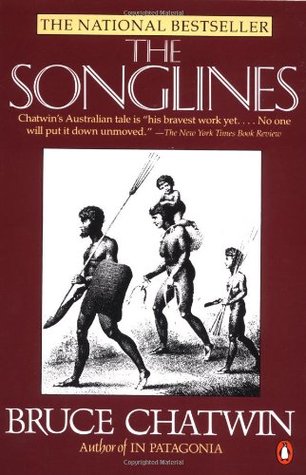
The Songlines: An influential work on Aboriginal people, Australia

76844Bruce Chatwin’s The Songlines is a book that’s like many good trips: suddenly, you find yourself navigating an unfamiliar, confusing and even intimidating region, but by the end you realize you’ve had an irreplaceable, once-in-a-lifetime experience.

For students of my COMM 373 Australia winterim course, a trip that begins with our departure from Chicago Dec. 27, this may be especially true.  Chatwin’s work isn’t always easy to read. At times, it might seem to less patient readers that Chatwin’s writing is like the Australian outback.

Many would perceive the outback as vast, substantially flat, incomprehensible in its sameness, and tough to find one’s way through; a look in any direction might show more features that are hard to distinguish from the last set.  One might not see the small details that differentiate one apparently barren spot from another.  Even when discernible, these features might not promise anything substantially different in an interminable landscape beyond.

Continue reading