Setting the record straight on “Waupaca”

“Menominee Morning Song” by James F. Frechette, Jr. Photos by author; permissions courtesy of Mike Hoffman and UWSP Museum of Natural History

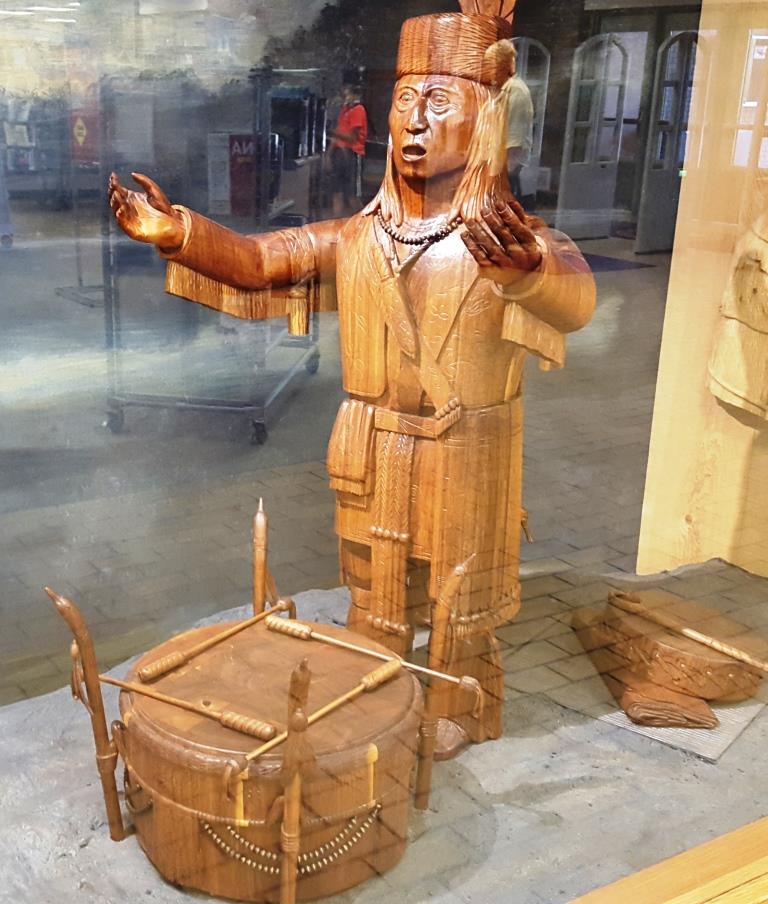
Seeing clearly often means going directly to the source, and when it comes to native Wisconsin terminology, there’s none better than one of our few remaining speakers of the Menominee language.

A couple of months ago, I wrote about a hike on the Waupaca River segment of the Ice Age Trail and devoted two short paragraphs to the puzzle of why the Waupaca River is named “Tomorrow” on its upper half. In doing so, as I noted in a later column, I passed on some incorrect information regarding the meaning of the Menominee word “waupaca.”

The mistake did give me, however, a chance to visit with Mike Hoffman, a Menominee elder who is one of perhaps a dozen remaining fluent speakers of Menominee. We conversed over coffee in June to talk about the Waupaca, among other things.

Trying to get to that place  

The dual-named river is the result of a great deal of storytelling and misinformation. Incorrect or inaccurate interpretations of the name are published in multiple places, including the main web page of the Waupaca Historical Society (which notes that it is a Menominee word meaning “tomorrow” or “pale water”).

Continue reading

Eewww, gross! A comma splice!

A discussion in which several friends are taking part over on Facebook inspired me to revive and repost this seven-year-old rumination on comma splices and more. It’s from my now-mothballed “dr. shill” blog (Oct. 22, 2010).


The comma splice is among the most loathsome of errors. It should be wiped off the face of the earth with extreme prejudice. No, I’m not kidding.

They say post-apocalyptic cockroaches will inherit the earth. Sometimes I think comma splices will give them a run for their money.

On a beautiful fall day recently, my colleague Dr. Rhonda Sprague came to observe my teaching. From our third-floor lab, one could still see a good deal of flaming red and yellow foliage along Briggs Street as it ran to a dead end just outside our class.

As I reviewed the concepts behind identifying and avoiding comma splices, I mentioned to my students that comma splices increasingly creep into newspaper writing, especially at smaller newspapers and in quoted material.  Dr. Sprague startled me by raising her hand and asking whether they’re acceptable in novels, as she has noticed many during her own reading.

Continue reading

Nobility not required, but courtesy is nice

winding-trackI ran into the Queen of England on the Green Circle recently.

At least I think it was The Queen.  Y’know, the one with the little corgi dogs who have the run of the kingdom, because they’re Royal with a capital “R” and I’m definitely not.

That’s “not” with a lower-case “not on your piddly little life, peasant.”

But there were two corgis, right on the groomed cross-country skiing trail, being walked by The Queen Her Own Self.

Continue reading

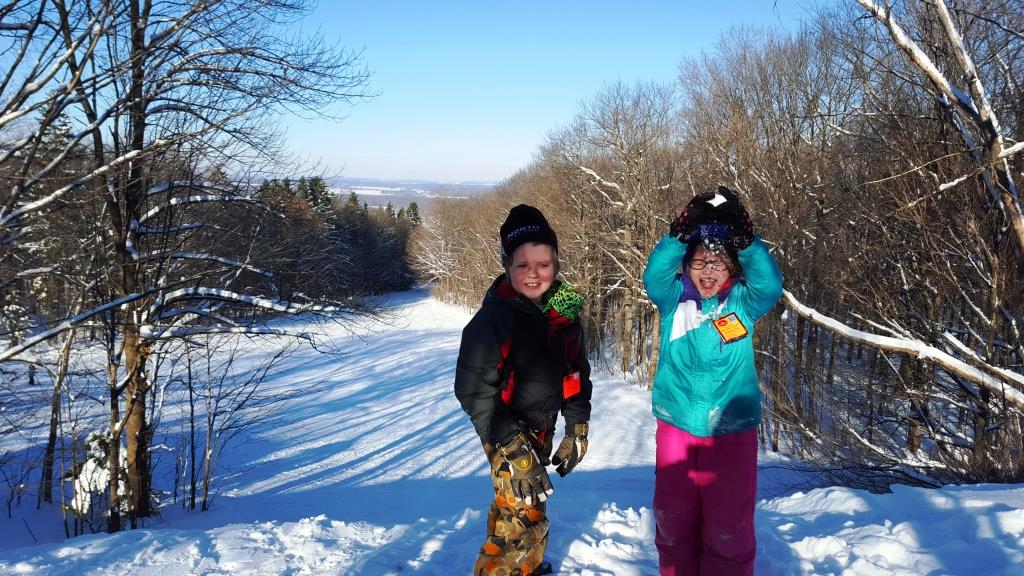
Powers Bluff Offers Himalayan-Sized Fun

Choosing between the year’s best football game and one of the best winter afternoons to get kids outside is always a tough call.

But who cares about kids anyway?

OK – most of us.  At least most of us who don’t drive around with Washington D.C. vanity plates that say “LEGI$L8R” on them.

As an aside: is “D.C. vanity” redundant?

But back to the point. It was a couple of weeks ago, when the Dallas-Green Bay kickoff loomed and I was lining up the salmon dip and beer.

Continue reading

Time to start asking questions about Rib Mountain proposal


path
Some potentially bad news confronted me last week, reminding me of what we should all do when that happens: ask lots of questions, and head for the mountains.

Or the mountain.  Because I’m writing literally, not metaphorically.

I am not talking about the possibly apocalyptic farce that is our so-called election or its aftermath.  I’m talking about Rib Mountain State Park, which apparently is still the target of ski-slope expansion plans.

This slideshow requires JavaScript.

Who’s planning it?  Why?  Is it viable?  What will it do to our beloved state park?  On balance, will the costs be greater than the benefits? Who exactly will this benefit?

Most importantly – should we go hike more trails over there right now?  The answer to that is yes. Continue reading